

language
Product




News
Our company offers a comprehensive set of products in the industrial, commercial and
residential fields.
Why Ballast Roof Mounting Brackets Are Gaining Popularity in Solar Installations
Release time:
2026-05-17
Why Ballast Roof Mounting Brackets Are Gaining Popularity in Solar Installations
Table of Contents
- 1. Introduction to Solar Installations
- 2. Understanding Ballast Roof Mounting Brackets
- 3. Advantages of Ballast Roof Mounting Brackets
- 4. Climate Resilience of Ballast Systems
- 5. Environmental Considerations
- 6. Installation Ease and Cost Efficiency
- 7. Technological Advancements in Roof Mounting
- 8. Future Trends in Solar Installations
- 9. Frequently Asked Questions
- 10. Conclusion
1. Introduction to Solar Installations
The increasing demand for renewable energy has considerably accelerated the growth of solar power installations across the globe. As technology advances, the methods and materials used to install solar panels have evolved, leading to innovative solutions that enhance efficiency and stability. Among these solutions, **ballast roof mounting brackets** have gained notable traction. These systems are increasingly favored for their ability to provide a secure, stable foundation for solar panels without requiring invasive modifications to the roof structure.
2. Understanding Ballast Roof Mounting Brackets
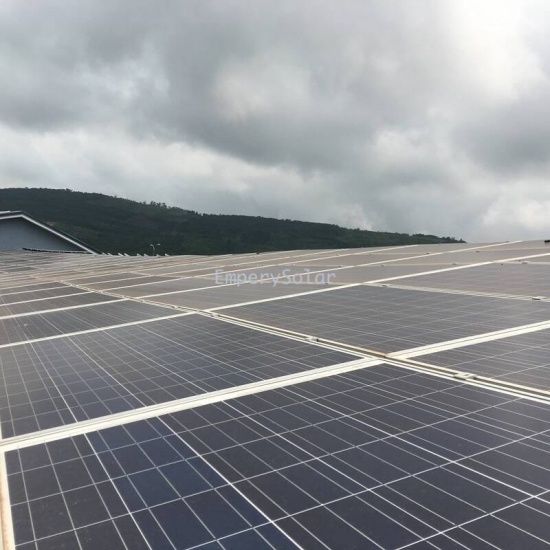
Ballast roof mounting brackets are designed to hold solar panels in place using weighted materials instead of traditional methods that require drilling into the roof. These brackets rest on the roof surface and use gravitational force, often supplemented with additional weights, to keep the solar panels securely in position. The primary objective of these systems is to ensure that solar panels can withstand various environmental challenges, such as wind and snow loads.
3. Advantages of Ballast Roof Mounting Brackets
The popularity of ballast roof mounting brackets can be attributed to various advantages they present over conventional mounting systems.
3.1 Stability and Safety
Stability is paramount in solar installations, particularly in regions prone to high winds. Ballast brackets are specifically designed to provide a robust anchoring solution, ensuring that solar panels remain intact regardless of environmental conditions. Their design accounts for structural integrity, providing peace of mind for building owners and installers.
3.2 No Roof Penetration
One of the most significant advantages of ballast systems is that they do not penetrate the roof membrane. Traditional mounting systems often require drilling, which can lead to potential leaks and structural damage. By eliminating the need for penetrations, ballast systems not only protect the integrity of the roof but also reduce the risk of costly repairs and maintenance.
3.3 Displacement and Weight Distribution
Another crucial aspect of ballast roof mounting brackets is their ability to distribute weight evenly across the roof surface. This feature prevents localized stress on the roofing materials, reducing the likelihood of damage. The even distribution of weight also enhances the longevity of both the solar system and the roof itself.
4. Climate Resilience of Ballast Systems
As climate change intensifies, solar installations face increased challenges from severe weather events. Ballast roof mounting brackets offer notable resilience against these challenges. The secure anchoring provided by the added weight helps panels resist uplift forces caused by strong winds, while their robust design can withstand heavy snow loads without risk of failure.
5. Environmental Considerations
Incorporating ballast roof mounting brackets is also aligned with environmentally sustainable practices. By avoiding roof penetrations, these systems preserve the overall integrity of existing structures and reduce waste associated with repairs. Furthermore, many ballast systems can integrate with green roofing solutions, enhancing the environmental benefits of solar installations.
6. Installation Ease and Cost Efficiency
The installation process for ballast roof mounting brackets is generally simpler and quicker compared to traditional mounting options. The absence of roof penetrations means installers can work more efficiently, reducing labor costs. Additionally, since ballast systems do not require extensive structural modifications, they can be an economically viable solution for many building owners.
7. Technological Advancements in Roof Mounting
The evolution of solar technology has also spurred innovation in mounting solutions. Modern ballast systems are often equipped with features that enhance performance, such as adjustable angles for optimal solar exposure. This adaptability ensures that solar panels can achieve maximum efficiency regardless of the building's orientation or structural limitations.
8. Future Trends in Solar Installations
As the solar industry continues to evolve, we expect to see a significant increase in the adoption of ballast roof mounting brackets. Future trends may include advancements in materials that further enhance weight distribution and durability, as well as smart technologies that enable real-time monitoring of solar panel performance. The integration of these technologies will likely enhance the overall efficiency and reliability of solar installations.
9. Frequently Asked Questions
1. What are ballast roof mounting brackets?
Ballast roof mounting brackets are devices that hold solar panels in place using weighted materials instead of requiring roof penetrations for installation.
2. Are ballast systems suitable for all roof types?
Yes, ballast systems can be adapted to various roof types, including flat and low-slope rooftops, making them a versatile option for many buildings.
3. How do ballast roof mounting brackets ensure stability during high winds?
The added weight of the ballast provides a counterforce against wind uplift, ensuring that the solar panels remain securely in place.
4. Can ballast systems be used in areas with heavy snowfall?
Absolutely. Ballast systems are designed to withstand substantial loads, including heavy snow, without compromising the integrity of the solar installation or the roof.
5. What are the environmental benefits of using ballast roof mounting brackets?
Ballast systems minimize the risk of roof damage due to penetrations, reduce repair waste, and can be integrated with green roofing solutions, enhancing overall sustainability.
10. Conclusion
In conclusion, the rising popularity of **ballast roof mounting brackets** in solar installations is attributed to their unique advantages, including enhanced stability, environmental protection, installation ease, and economic viability. As the solar industry continues to evolve, embracing innovative mounting solutions like ballast systems will be essential in meeting the growing demand for renewable energy while ensuring the longevity and efficiency of solar installations. As we look to the future, the integration of advanced technologies with ballast systems will likely redefine how we approach solar energy solutions, paving the way for a more sustainable and resilient future.
RELATED BLOG

EmperySolar Celebrates Mid-Autumn Festival with a Bo Bing Dinner
Xiamen EmperySolar hosted a Mid-Autumn Bo Bing dinner to celebrate Minnan culture, appreciate employees and strengthen team spirit.
View Details


Xiamen Empery Solar Technology Co.,Ltd.

Room 611, Quanyutong Business center, No.368, Xianhou She, Huli Districts. Xiamen,China.


Whatsapp : +86-13950145677


