

Product




News
Our company offers a comprehensive set of products in the industrial, commercial and
residential fields.
Understanding Ground Mount Solar Racking: Essential Insights for Efficient Solar Energy Deployment
Release time:
2026-06-23
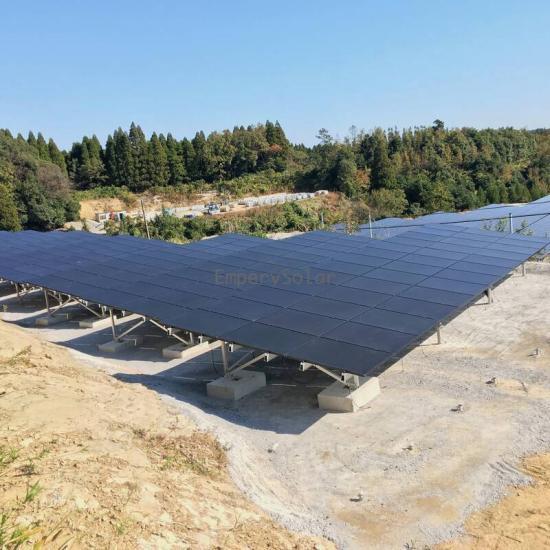
One of the notable benefits of ground mount solar racking is its flexibility in design and installation. Unlike rooftop systems, ground mount solutions can be tailored to fit various terrains and landscapes, whether flat or uneven. Common types of ground racking systems include fixed-tilt and tracking systems. Fixed-tilt systems maintain a single angle to capture sunlight efficiently throughout the day, while tracking systems adjust the angle of the panels to follow the sun’s path, thereby maximizing energy capture.
When considering ground mount solar racking, several key factors come into play. First is the site assessment, which involves evaluating the land’s topography, soil conditions, and sunlight exposure. Proper site selection ensures that the solar panels receive optimal sunlight and do not face obstacles, such as trees or buildings, that could obstruct solar irradiation. Additionally, the racking system must be appropriately engineered to withstand environmental conditions, such as strong winds, heavy snow, or seismic activity, depending on the geographical location.
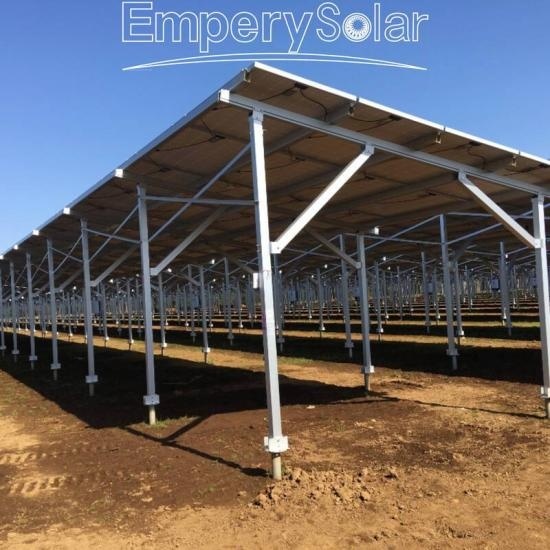
Installation of ground mount solar racking requires a thoughtful approach. It typically involves excavation, leveling, and securing poles or frames into the ground. Depending on the type of racking system chosen, either concrete footings or driven piles may be used to secure the structure. It is essential to follow best practices and local regulations during the installation process to ensure safety and compliance.
The benefits of choosing ground mount solar racking extend beyond just efficiency. These systems can increase the overall energy output of solar installations, as they can be positioned in optimal locations with ample sunlight exposure. Furthermore, ground mounts allow for easier maintenance and accessibility compared to rooftop systems, making it simpler to inspect and clean the panels.
In summary, Ground Mount Solar Racking is an integral component of solar energy systems, particularly for large installations. By understanding the various types, installation considerations, and benefits associated with ground mount racking, individuals and organizations can make informed decisions that will enhance the effectiveness and longevity of their solar energy solutions. Embracing this knowledge is vital for anyone involved in the solar industry or considering solar energy deployment.
RELATED BLOG

Understanding Ground Mount Solar Racking: Essential Insights for Efficient Solar Energy Deployment
Ground Mount Solar Racking refers to the structure used to secure solar panels on the ground, as opposed to rooftop installations. This system is particularly advantageous for large-scale solar energy projects, agricultural operations, and areas where rooftops may not be suitable for solar panel deployment. The primary function of ground mount racking is to provide a stable, durable foundation for
View Details


Xiamen Empery Solar Technology Co.,Ltd.

Room 611, Quanyutong Business center, No.368, Xianhou She, Huli Districts. Xiamen,China.


Whatsapp : +86-13950145677


