

Product





News
Our company offers a comprehensive set of products in the industrial, commercial and
residential fields.
New Trends in International Photovoltaic Power Plant Installation in 2026
Release time:
2026-02-05
New Trends in International Photovoltaic Power Plant Installation in 2026: From Rapid Expansion to Deeper Value Development
The international energy market is reaching a turning point, with global photovoltaic (PV) installation growth slowing for the first time. However, this is not a sign of recession, but rather a sign of industry maturity. In 2026, the global PV industry is expected to experience a historic moment, with the first brief fluctuation in the growth curve of the past two decades.
01 Growth Inflection Point
For the past two decades, the global PV industry has almost been on a continuous upward growth curve. However, 2026 will be a significant "inflection point" on this curve. Although S&P Global Energy's forecast differs slightly, predicting a decline of less than 10%, multiple institutions agree that the industry will experience its first annual contraction. The International Solar Energy Association's forecast is slightly more optimistic, predicting that global new PV installations will reach 665 gigawatts in 2026, but the growth rate will be only 1%, almost stagnant. This marks the industry's transition from a "super-fast expansion period" to a "more mature and complex" growth stage.
The core driving factor is the policy adjustment in the world's two largest PV markets: China's policy shift is a key factor. The shift from fixed feed-in tariffs to a market-based competitive pricing mechanism has brought uncertainty to investors, shifting the focus from simply pursuing installed capacity to project quality and grid integration.
The US market faces a period of adjustment due to tightening federal licensing rules, the gradual withdrawal of some incentive policies, and trade barriers. These factors have collectively led to more cautious investment in large utility projects. Furthermore, mature markets such as Spain and Brazil are also constrained by grid capacity limitations and midday price drops, suppressing new investment.
02 Market Trends
With the "frenzy" of new installations temporarily slowing, the industry's focus naturally shifts to exploring intrinsic value. In 2026, the installation and operation models of photovoltaic power plants will undergo profound changes.
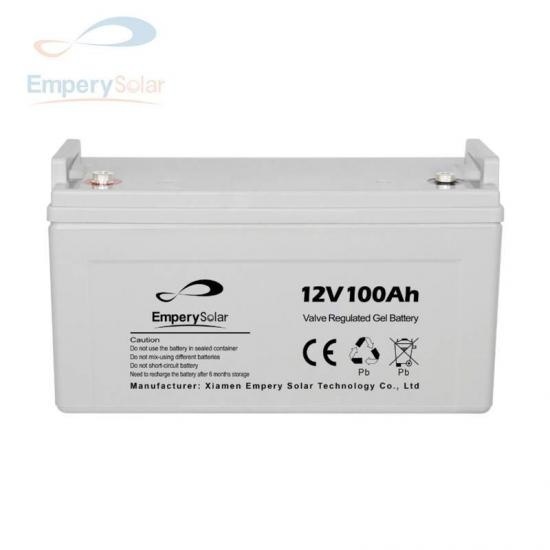
Energy storage is becoming standard. As photovoltaic penetration increases, the intermittent nature of its power generation puts pressure on the grid. Battery energy storage systems are rapidly changing from "optional" to "essential." Four-hour lithium-ion energy storage has become standard in hybrid photovoltaic projects, while long-duration energy storage technology is beginning to enter commercialization. The photovoltaic (PV) + energy storage model is transforming solar energy from an intermittent resource into a dispatchable and stable power source.
The demand for power plant refurbishment is rising. With the world's first large-scale PV power plants exceeding 10-15 years of operational life, a significant emerging market is appearing: upgrading and retrofitting older power plants. Replacing high-efficiency modules, upgrading inverters, and operating systems to restore or even enhance power plant generation capacity is becoming a significant opportunity for service companies.
The installation market structure is changing. In mature markets like the US, mid-sized installers focusing on a few states or cities are expected to be growth engines. They leverage strong local customer relationships and flexible, efficient operations to gain an advantage in markets where quality is increasingly valued.
Technology and safety standards are being upgraded. Cutting-edge technologies such as perovskite tandem solar cells continue to advance towards commercialization, with efficiency continuously improving. Meanwhile, starting in January 2026, safety standards such as "fast shutdown," based on US regulations, will come into effect in more international markets, reshaping global PV system installation standards.
03 Long-Term Outlook
The current slowdown is a "breathing adjustment" for the industry, not the start of a long-term downward trend. Most institutions predict that the market will resume growth in 2027, with new installations expected to reach approximately 688 gigawatts. Looking further ahead, global cumulative photovoltaic (PV) installations are expected to double in the next five years.
This growth will be supported by continued momentum in emerging markets, rapid deployment of energy storage technologies, and historically low component costs. PV, with its inherent scalability and economics, will continue to unlock new global markets. The industry is learning to adapt to a new normal of "growth without guaranteed annual increases in installed capacity." This will force companies to integrate and strategically transform, focusing more on project quality, grid integration capabilities, and long-term value creation.
When the global installation growth curve flattens for the first time, competition in the PV industry will truly begin. The era of simply manufacturing and installing components is over. The core challenge after 2026 is how to integrate every kilowatt-hour of solar energy into the grid more stably, efficiently, and intelligently, becoming a true baseload energy source.
RELATED BLOG

EmperySolar Celebrates Mid-Autumn Festival with a Bo Bing Dinner
Xiamen EmperySolar hosted a Mid-Autumn Bo Bing dinner to celebrate Minnan culture, appreciate employees and strengthen team spirit.
View Details


Xiamen Empery Solar Technology Co.,Ltd.

Room 611, Quanyutong Business center, No.368, Xianhou She, Huli Districts. Xiamen,China.


Whatsapp : +86-13950145677


