

Product



News
Our company offers a comprehensive set of products in the industrial, commercial and
residential fields.
Ground Mount Solar Racking: Durable and Flexible Support for Modern PV Projects
Release time:
2026-02-12
Introduction
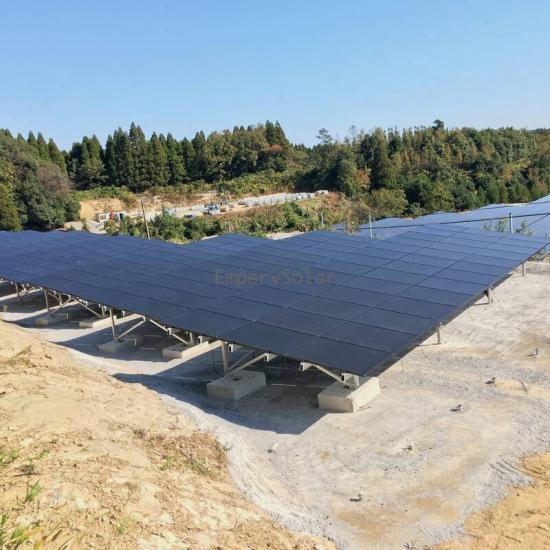
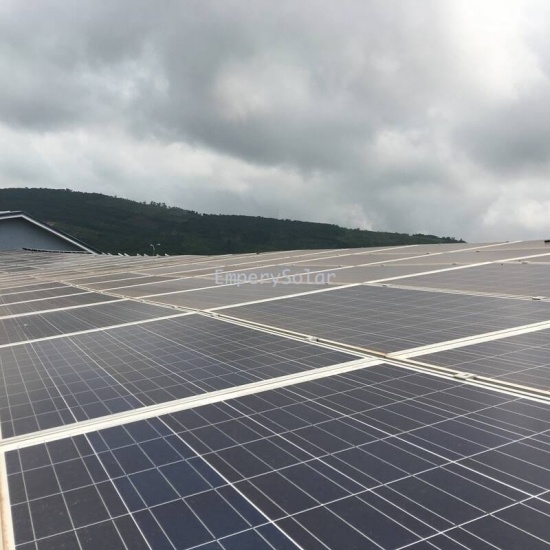
Ground mount solar racking systems provide a reliable structural platform for photovoltaic modules installed on open land. Compared with rooftop mounting, ground-mounted solutions offer greater design freedom, easier access for maintenance, and the ability to deploy large-scale arrays. These advantages make them ideal for commercial, industrial, and utility solar applications where performance, longevity, and expandability are critical.
As solar projects continue to grow in size and complexity, the importance of a well-engineered racking structure becomes even more evident. The stability of the mounting system directly affects energy yield, system safety, and long-term financial returns.
What Is a Ground Mount Solar Racking System?
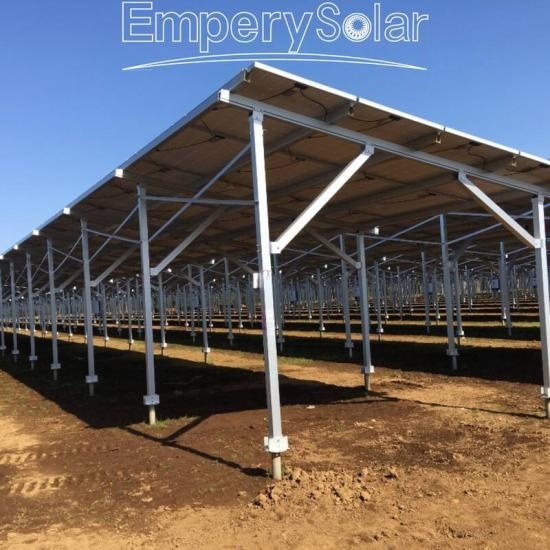
A ground mount solar racking system secures PV modules onto a framework fixed to the earth. It usually consists of vertical supports, horizontal rails, module clamps, and fastening components. The system is engineered to withstand wind pressure, snow load, and environmental corrosion while keeping panels positioned at the optimal tilt angle.
Because the structure is independent of buildings, developers can orient the array for maximum sunlight exposure. This flexibility leads to improved system productivity compared with installations limited by roof geometry.
Structural Materials and Engineering
High-quality ground mount systems often use anodized aluminum and hot-dip galvanized steel. Aluminum provides lightweight handling and excellent corrosion resistance, while steel contributes additional strength for demanding load requirements. Together they create a durable solution capable of operating for decades in outdoor environments.
Engineering calculations are adapted to local geography and climate. Whether the project is located in coastal, desert, or mountainous regions, the racking system must maintain structural integrity throughout its service life.
Foundation Options
Different soil conditions require different anchoring methods. Common foundation solutions include ground screws, driven piles, and concrete bases. These options allow installers to select the most economical and stable approach for each project.
Proper foundation design ensures that the array remains secure during extreme weather while minimizing ground disturbance and civil engineering costs.
Installation Advantages
Ground mount solar racking is widely appreciated for its installation efficiency. Many components are pre-assembled before shipment, reducing field labor and shortening construction timelines. Modular designs simplify alignment and allow teams to scale rapidly from small installations to large solar farms.
Since technicians can walk around the structure freely, electrical wiring, inspection, and future upgrades are more convenient than rooftop work.
Performance Improvement
One of the most significant benefits of ground-mounted PV is the ability to optimize orientation and tilt. Engineers can determine the best configuration for seasonal and annual irradiation, maximizing energy production.
Improved airflow around the modules helps maintain lower operating temperatures, which contributes to higher efficiency and longer equipment life. These factors collectively increase the overall return on investment.
Durability and Long-Term Value
Solar plants are typically designed for 25 years or more. Therefore, the mounting structure must deliver consistent reliability over decades. Anti-corrosion treatment, high-strength hardware, and rigorous testing ensure that the racking can survive harsh environmental challenges.
A dependable support system reduces maintenance frequency and protects power generation revenue over the lifetime of the project.
Application Flexibility
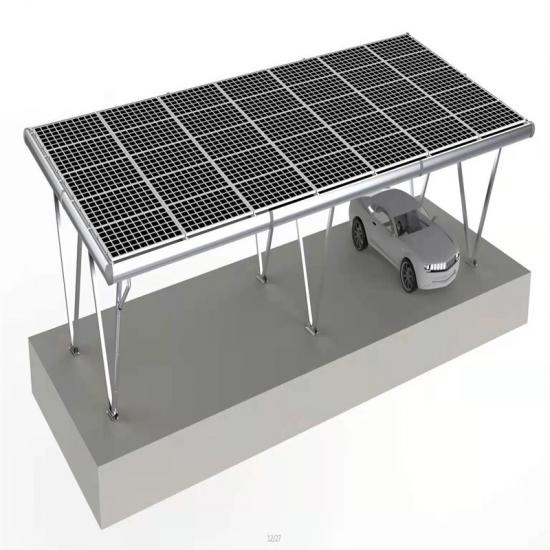
Ground mount solar racking can be adapted for agricultural projects, industrial facilities, and remote energy systems. Adjustable heights enable dual land use, such as grazing or crop cultivation beneath the array. Flexible layouts also allow designers to work with irregular plots of land.
This adaptability makes ground-mounted solutions a preferred option for developers seeking to maximize land utilization.
Conclusion
Ground mount solar racking forms the backbone of successful photovoltaic installations. By combining mechanical strength, installation convenience, and performance optimization, it ensures that solar projects achieve stable and efficient energy generation. Choosing the right racking partner is a crucial step toward building sustainable and profitable renewable energy assets.
RELATED BLOG

EmperySolar Successfully Concludes Participation in IGEM 2026 Malaysia
Xiamen Empery Solar Technology Co., Ltd. successfully concluded its participation in the 2026 International Greentech & Eco Products Exhibition & Conference Malaysia
View Details


Xiamen Empery Solar Technology Co.,Ltd.

Room 611, Quanyutong Business center, No.368, Xianhou She, Huli Districts. Xiamen,China.


Whatsapp : +86-13950145677


